Think you understand why Korea feels impossible to crack? You don’t...yet. I’m Laura Valls, creator of the Expansion Friction Map™, and after 16 years fixing Western companies’ expansion failures here, I can tell you: it’s never the market, it’s the misalignment. The Korea Friction Brief is your weekly 5-minute debrief on what’s really blocking growth—trust gaps, silent rejections, partner fog—and how to fix them fast. Real cases. Tactical moves. No fluff, no theory. If you’re serious about turning friction into traction in Korea, subscribe now.
The Korean Friction Brief #14. How Musinsa turned culture into capital.
The Korea Friction Brief – Issue #14Founder Case Study: Musinsa and the Culture-First Growth ModelFrom sneaker snaps to a ₩10 trillion IPO: how Musinsa rewrote Korea’s fashion playbook In 2001, a shy 18-year-old in Seoul started uploading photos of sneakers to a tiny online forum. He didn’t know it then, but that habit would evolve into Korea’s first billion-dollar streetwear empire. Today, that forum ~Musinsa~ is preparing for a ₩10 trillion ($7.2 billion) IPO, backed by KKR and Wellington Management, and watched by every investor trying to decode the next Asian consumer giant. But behind the headlines lies the story of a founder who built a fashion nation before he built a company.
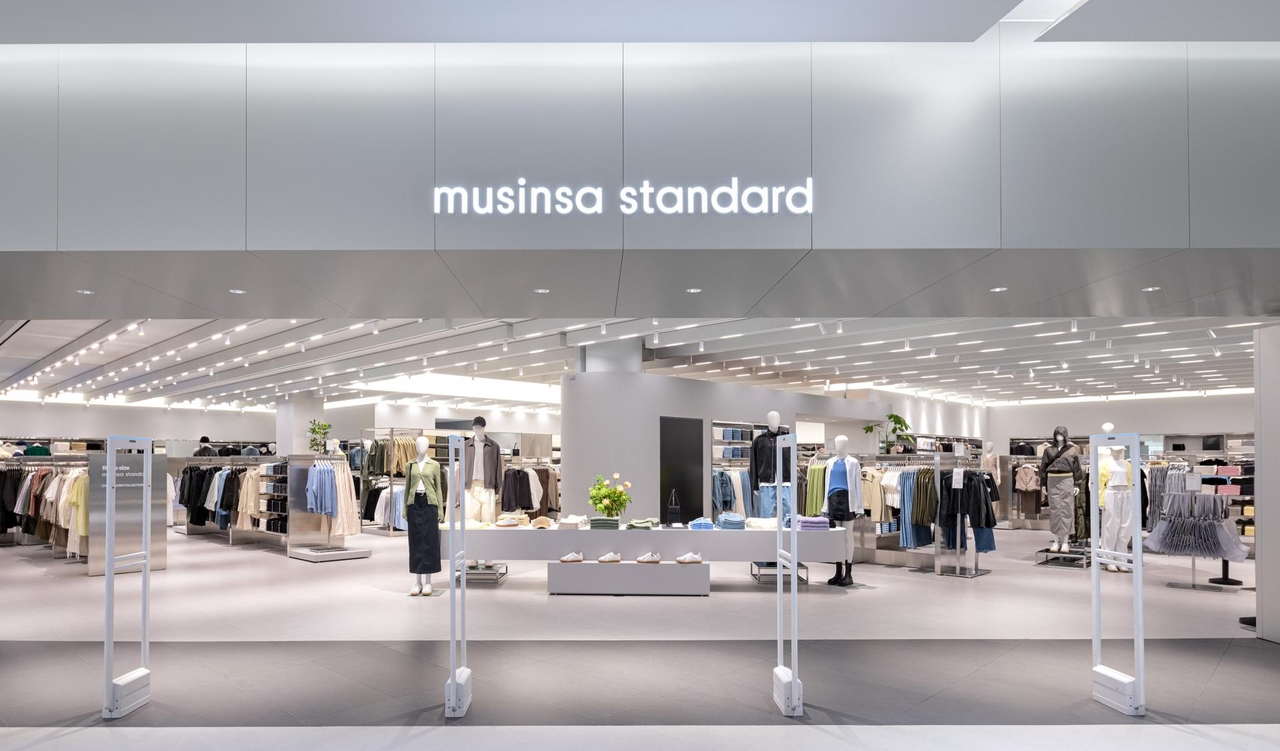
1. The kid with a camera2001. He uploads them to a small online forum he calls Musinsa, short for “infinite shoes” in Korean. Two decades later, that same forum is preparing for a ₩10 trillion ($7.2 billion) IPO. 2. The decade everyone said “no”Fast-forward to 2010. Korea’s e-commerce scene is a bloodbath. Conglomerates like Shinsegae and Lotte owned distribution, and investors wanted scale, not culture. Cho couldn’t raise money. He had no fashion background, no VC connections, no celebrity investors. So he did what every great founder does when ignored: he doubled down on what made him weird. Musinsa refused to discount. Refused to copy foreign brands. Refused to chase margins. Instead, it became a mirror for youth culture; a platform where small Korean designers could reach a crowd that actually cared. While everyone else built “malls,” Cho built momentum. 3. The bet that changed everythingBy 2017, Musinsa had grown into a massive online community, but profit was thin. The solution? Launch their own label. Everyone told Cho it was suicide. Why compete with your own sellers? He did it anyway. Musinsa Standard dropped that summer—minimal design, high-quality fabric, half the price of imported basics. It exploded. Today, Musinsa Standard runs 27 offline stores, drives over ₩100 billion ($75 million) in cumulative store sales, and pulled 13 million visitors in the first half of 2025 alone. That decision transformed Musinsa from marketplace → movement → manufacturer.
4. The flywheel nobody else could copyHere’s how the loop works: Community → Creator → Commerce → Culture → Back to Community. Each stage feeds the next. That’s why Musinsa now hosts 10.000 + brands, 2.000 of which sell globally through Musinsa Global across 13 countries, hitting 10.19 million monthly active users, up from 4 million in 2021. And because they own the culture, they own distribution too: 5. The numbers behind the mythRevenue in H1 2025: ₩670.54 billion (+22 % YoY). That’s not hype. That’s execution. In a market where legacy players like Shinsegae International are losing margin, Musinsa is growing + profitable + culturally relevant—a triple threat rare even in Asia.
6. The ₩10 trillion questionCan Musinsa really justify a ₩10 trillion valuation—triple its 2023 worth? Investors say yes, and their logic is simple:
Skeptics counter: Korea’s retail market is small, offline execution is hard, and fashion cycles are ruthless. But if Musinsa can hit ₩2 trillion in revenue and maintain profitability, it could join Korea’s corporate elite alongside HYBE and Korea Aerospace Industries. 7. The hidden ingredient → culture as infrastructureMusinsa didn’t win because of capital. In a culture built on hierarchy, Cho flattened it. In a society obsessed with perfection, he made imperfection cool. And while Western platforms chase virality, Musinsa built trust velocity, the speed at which credibility travels.
8. What Western founders should stealIf you’re building in culture-driven markets, Musinsa is your playbook:
Musinsa didn’t become a unicorn by chasing trends.
Friction Insight Most Western brands miss that. That’s why I built the Korea Expansion Health Check™, a 10-minute diagnostic that shows where your strategy fits, and where friction will block you. 👉 Take the Health Check and see how your playbook would perform in Korea’s “culture-first” market. DM for the link. Because in Korea, growth doesn’t start with speed. It starts with understanding. See you next week inside The Korean Friction Brief. Laura |


The Korea Friction Brief
Think you understand why Korea feels impossible to crack? You don’t...yet. I’m Laura Valls, creator of the Expansion Friction Map™, and after 16 years fixing Western companies’ expansion failures here, I can tell you: it’s never the market, it’s the misalignment. The Korea Friction Brief is your weekly 5-minute debrief on what’s really blocking growth—trust gaps, silent rejections, partner fog—and how to fix them fast. Real cases. Tactical moves. No fluff, no theory. If you’re serious about turning friction into traction in Korea, subscribe now.
Ask vs Align: Why Western Directness Backfires in Korea Western business culture is built on one simple rule: 💬 “If you want something, ask for it.” It’s a lesson drilled into us from school to boardroom.You make your case, you pitch your idea, you defend your value.You say it out loud because that’s how you’re seen. It’s how we prove ambition, initiative, and independence. Every leadership book reinforces it: the confident ask moves the world. But in Korea, asking is not a skill, it’s an art...
Why Korea’s fastest fintech built an empire on patience, not velocity In Korea, everyone talks about speed. “Ppalli-ppalli.” “Move fast.” “Launch faster.” But the real players?They know that speed kills when it’s blind. And no brand proves that better than Toss. The fintech giant that turned one simple idea (“Send money easily”) into a ₩10 trillion empire by doing the opposite of what Korea celebrates. They didn’t move fast. They moved deliberately. The Illusion of Korean Speed When I first...
The Korea Friction Brief – Issue #13 The Phantom StakeholderWhy your “approved” deal keeps getting blocked by someone you’ve never met. The Friction You get the message you’ve been waiting for: “Everything is good to go.” You celebrate, brief your team, start preparing the shipment — and then… silence. A few weeks later, a new name appears in the CC line.A “director,” “advisor,” or “senior consultant” you’ve never met.Suddenly, every timeline resets, and your “yes” turns into another round of...